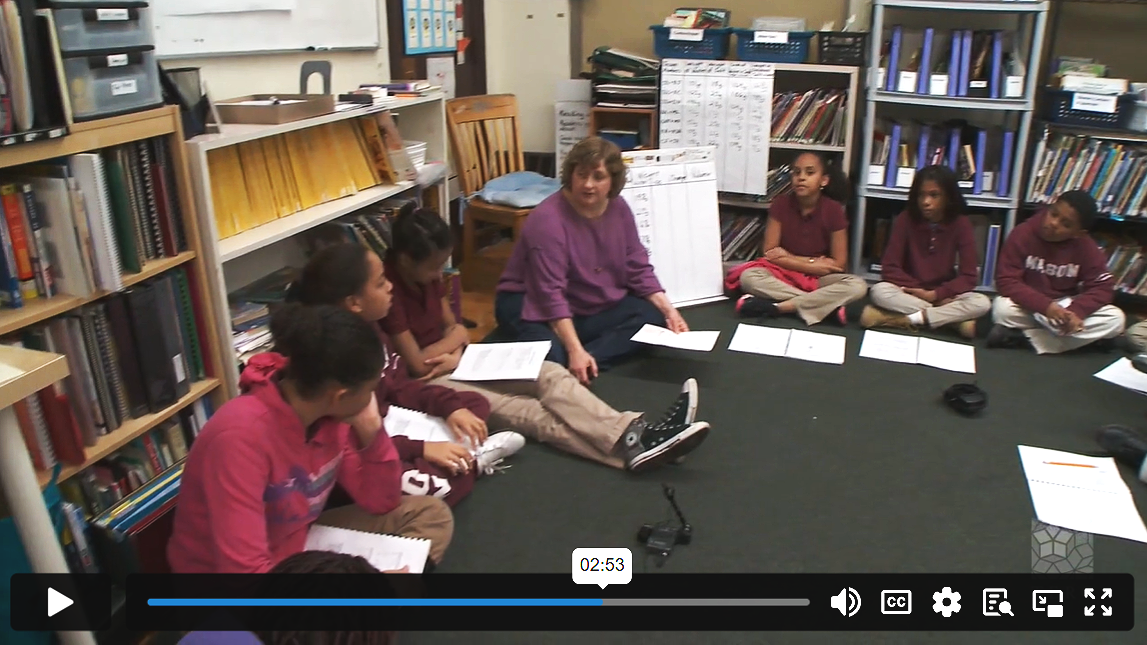
This series of videos from the Inquiry Project are such an incredible resource for anyone interested in classroom talk. They illustrate the power of dialogue to deepen pupils’ understanding of science.
Examples
In this example you can see the teacher developing productive classroom discussion – getting students to listen to each other’s ideas and to think about them.
In this further example you can see a group discussing their scientific predictions. As the video commentary points out, having them make a prediction forces them to reason and explore their own thinking, and to consider changing their position after hearing other pupils’ explanations.
Language of dialogue
You can also hear teachers using dialogic talk moves, and students using language of dialogue, as they listen and think together.
Example screengrab from an Inquiry Project video
(Note that I provide a ‘talk moves for teachers’ printable resource, based on the work of this project.)