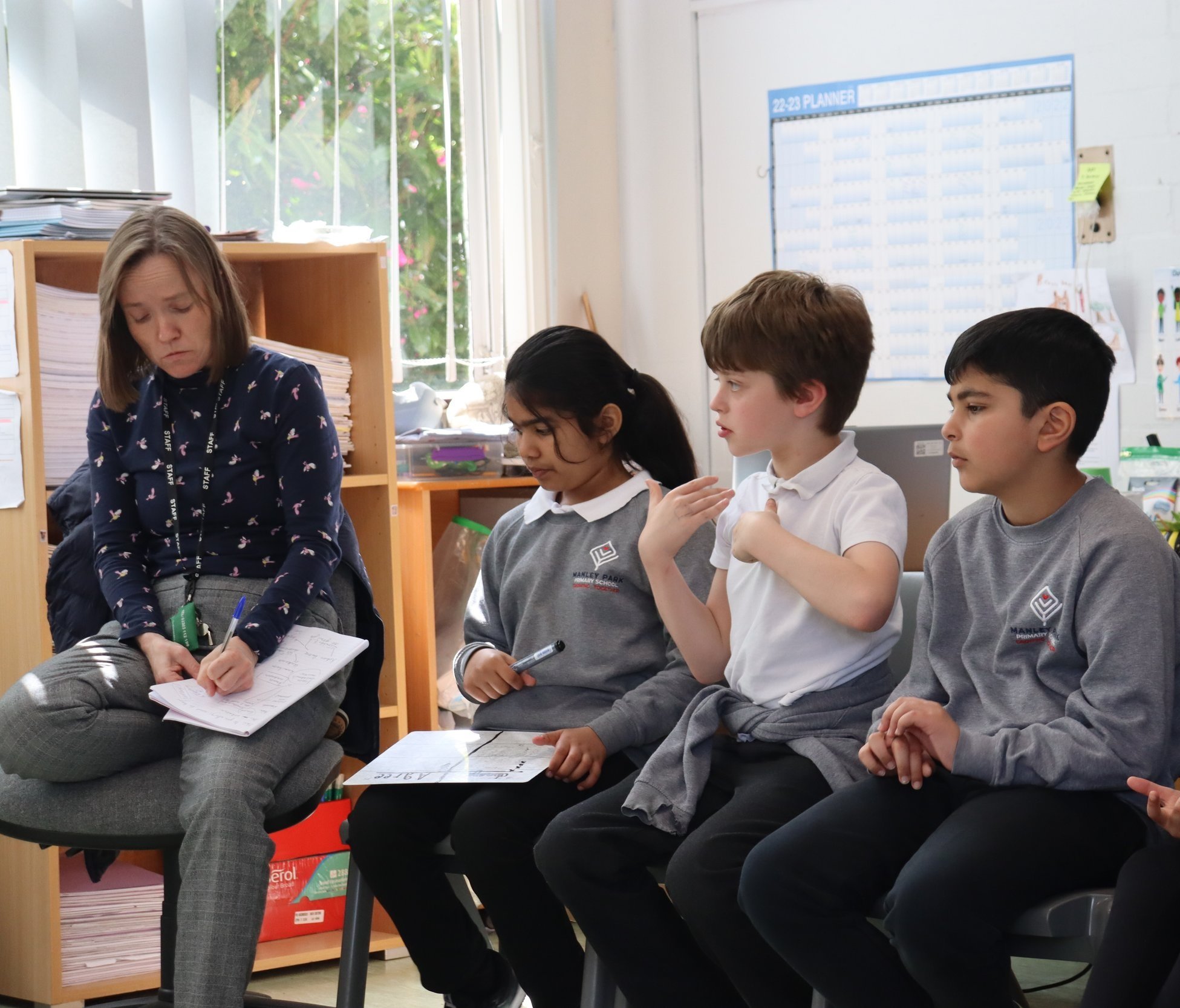
I love this photo. It’s from a Philosophy for Children enquiry. The boy in the white shirt is trying to get his point across, and his teacher is really focusing on trying to understand what he is thinking. To help with this she is making some notes.
This has several positive impacts:
The pupil knows he is being listened to and being taken seriously. His thoughts are valuable. And, everyone else in the class sees that their teacher is interested in what pupils say.
Listening carefully means the teacher can decide whether to let the dialogue flow, or to make a thoughtful facilitation move.
By taking notes, this teacher is modelling one way of active listening. She can also track the dialogue and refer back to different contributions at relevant moments. How does that fit with what Sammy said earlier about social media?