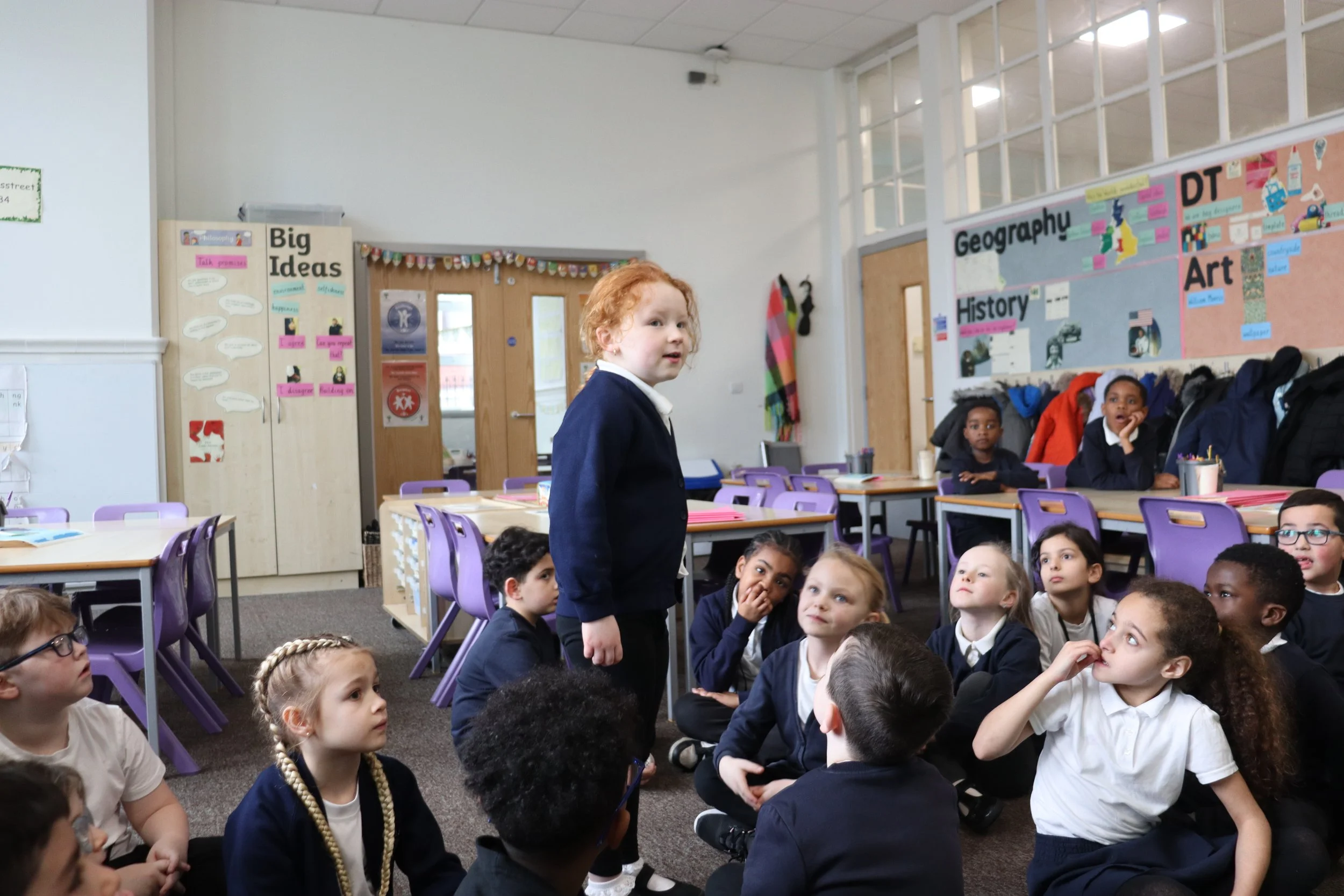
When we select a student to speak in whole-class talk we can be susceptible to bias.
Through doing talk audits, I’m increasingly aware there’s sometimes a gender imbalance in who is chosen to speak. In some classes, more boys than girls are chosen to speak. But overall, my experience is that girls are significantly more likely to be chosen than boys.
This appears to be an example of unconscious bias.
And one which will have unintended consequences. Students who are called on more often get more opportunities to express and develop their thinking, more opportunities to develop their confidence, and more opportunities to receive feedback. Students who are chosen less frequently get fewer opportunities.
Four things you could do:
Photo: Topsy Page
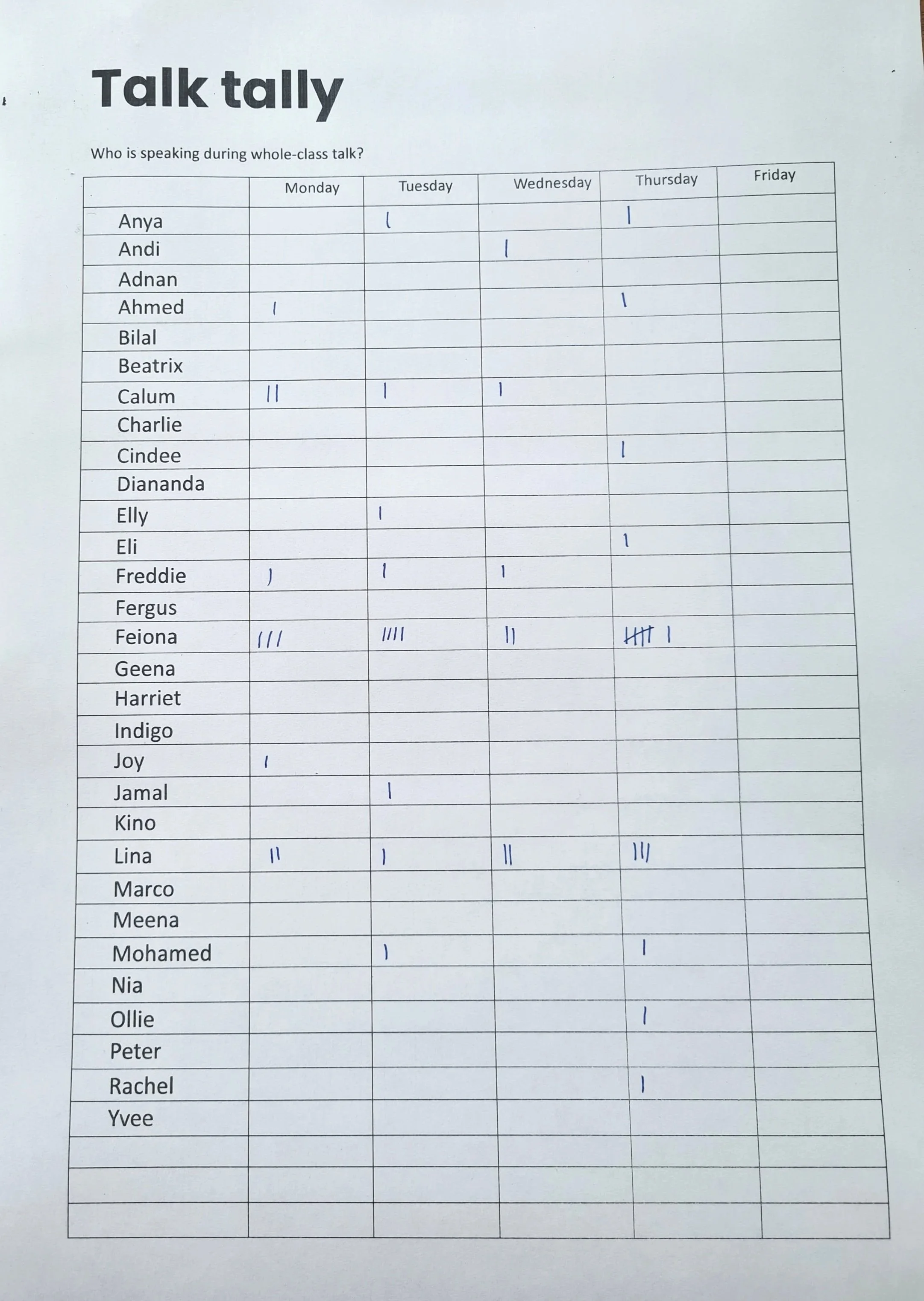
Mini-audit of your choices. Ask someone to make a note of who you’re calling on to speak. Do this several times. Then analyse, and reflect on any patterns that emerge.
Plan in advance who you want to answer some of your questions – this works really well when you want to check understanding. (Cold calling doesn’t always have to be decided in the moment.)
Use random selection sometimes – lolly sticks or a random name generator.
Use a talk tally – a record of who’s speaking during whole-class talk. I’ve seen this done really effectively; the teacher asks a student to keep the tally, and periodically directs them: H, choose someone who hasn’t spoken yet.
The goal is not equal participation at every moment – but that over time, we ensure everyone has a fair share of the opportunities to learn and contribute through their talk.