About
Latest posts
Contact
Subscribe
Resources

Topsy Page

About
Latest posts
Contact
Subscribe
Resources
Topsy Page
24 April 2026
Practical examples

“It’s forcing them, in a gentle way, to use their voice.”

Topsy Page
24 April 2026
Practical examples
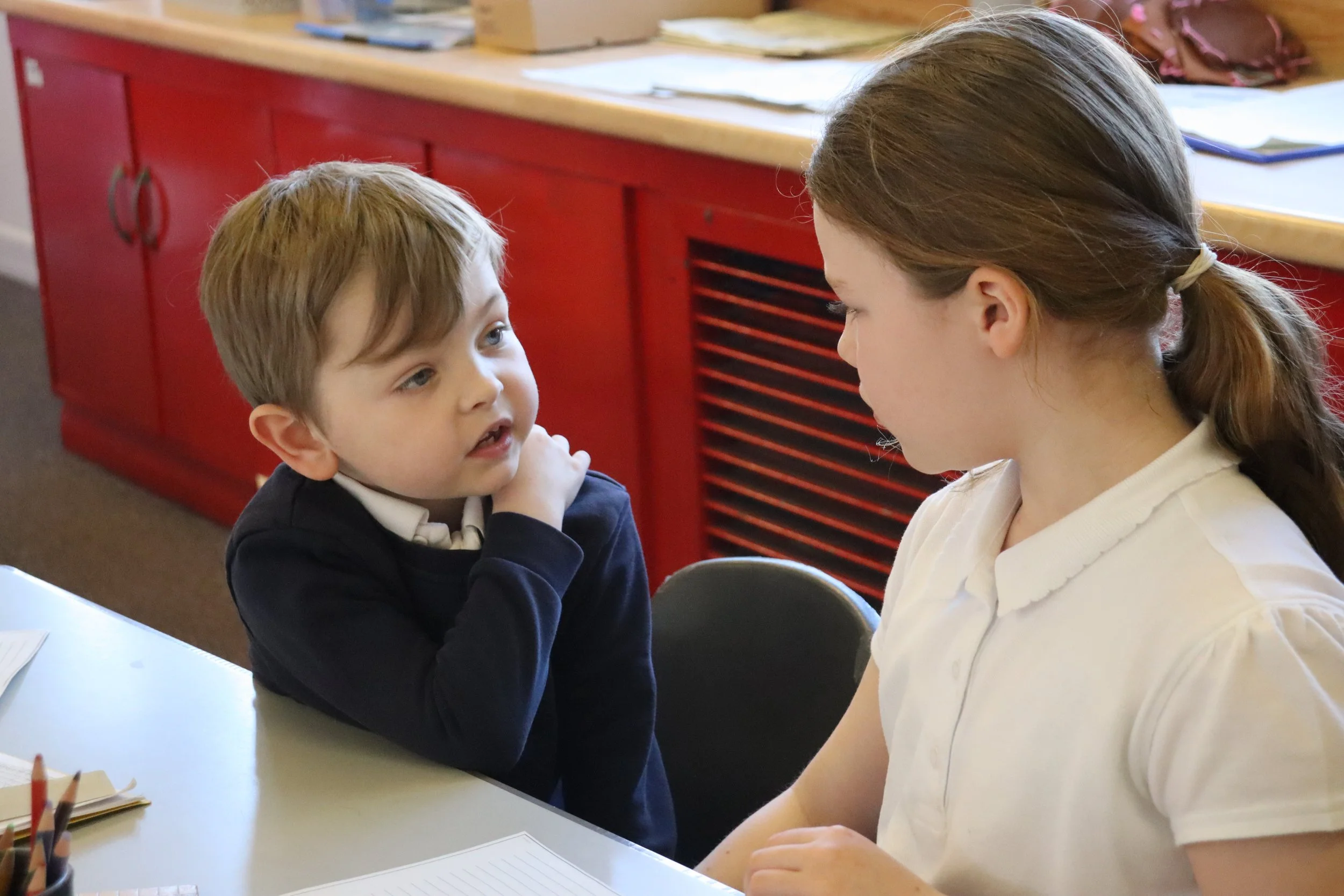
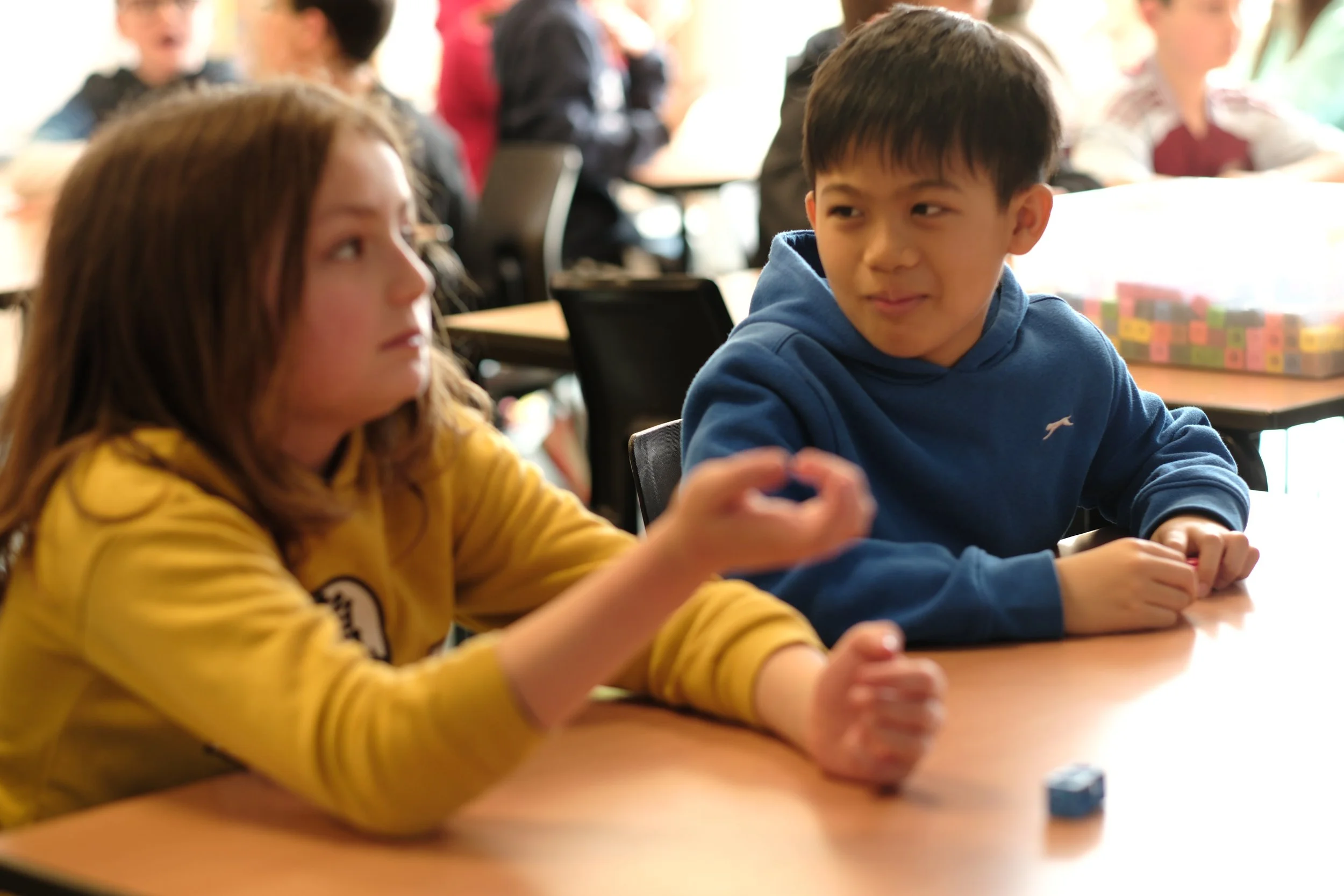
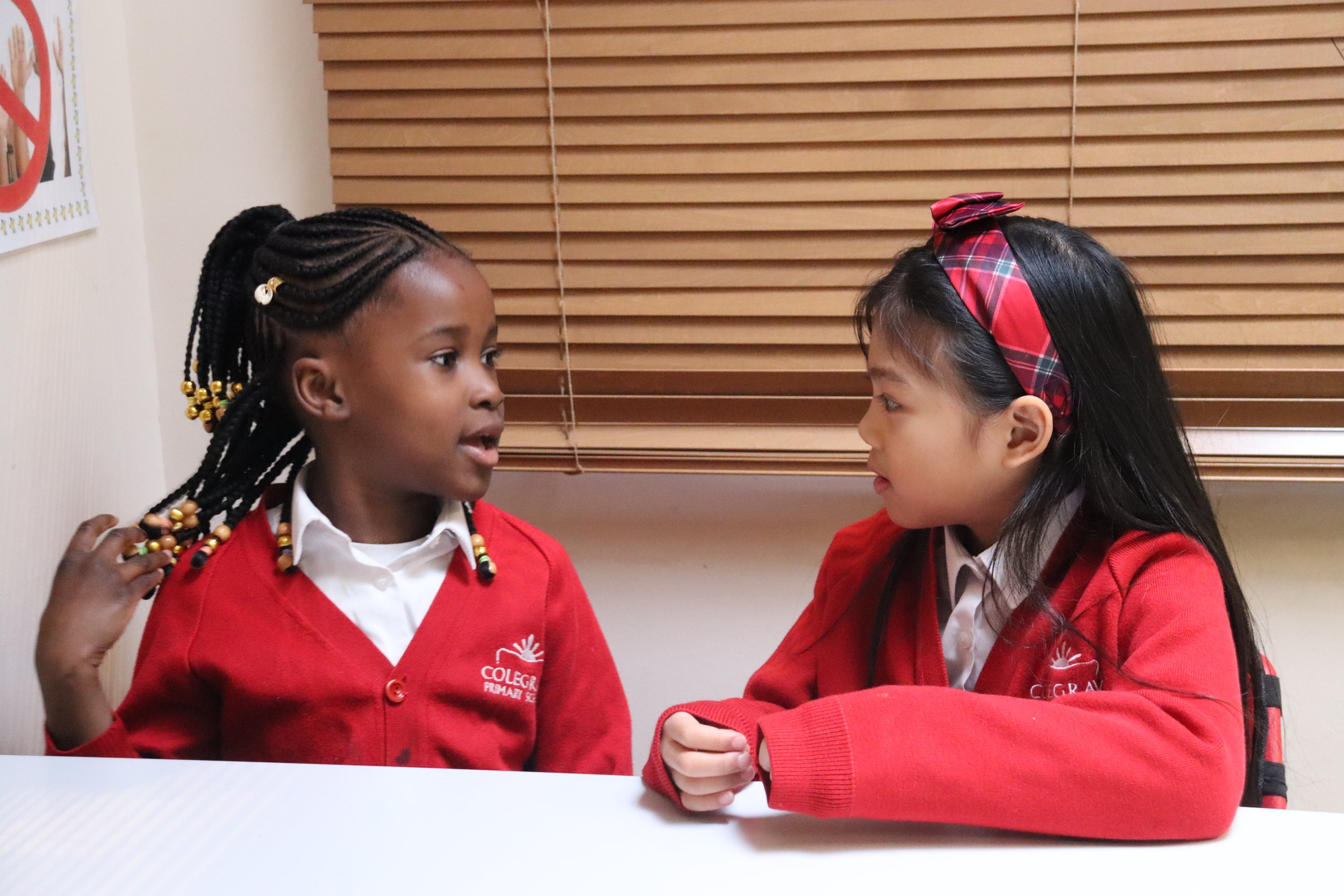
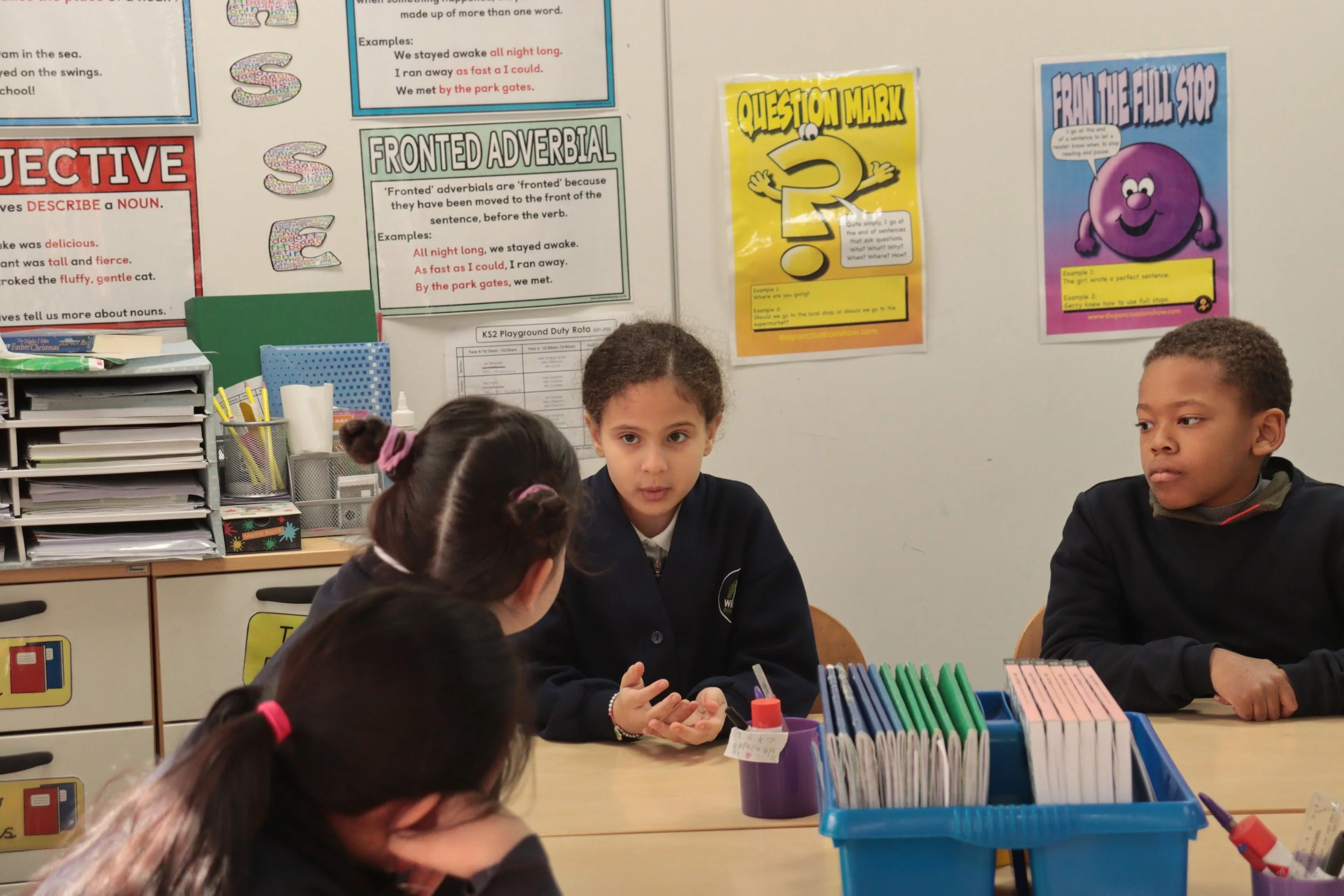
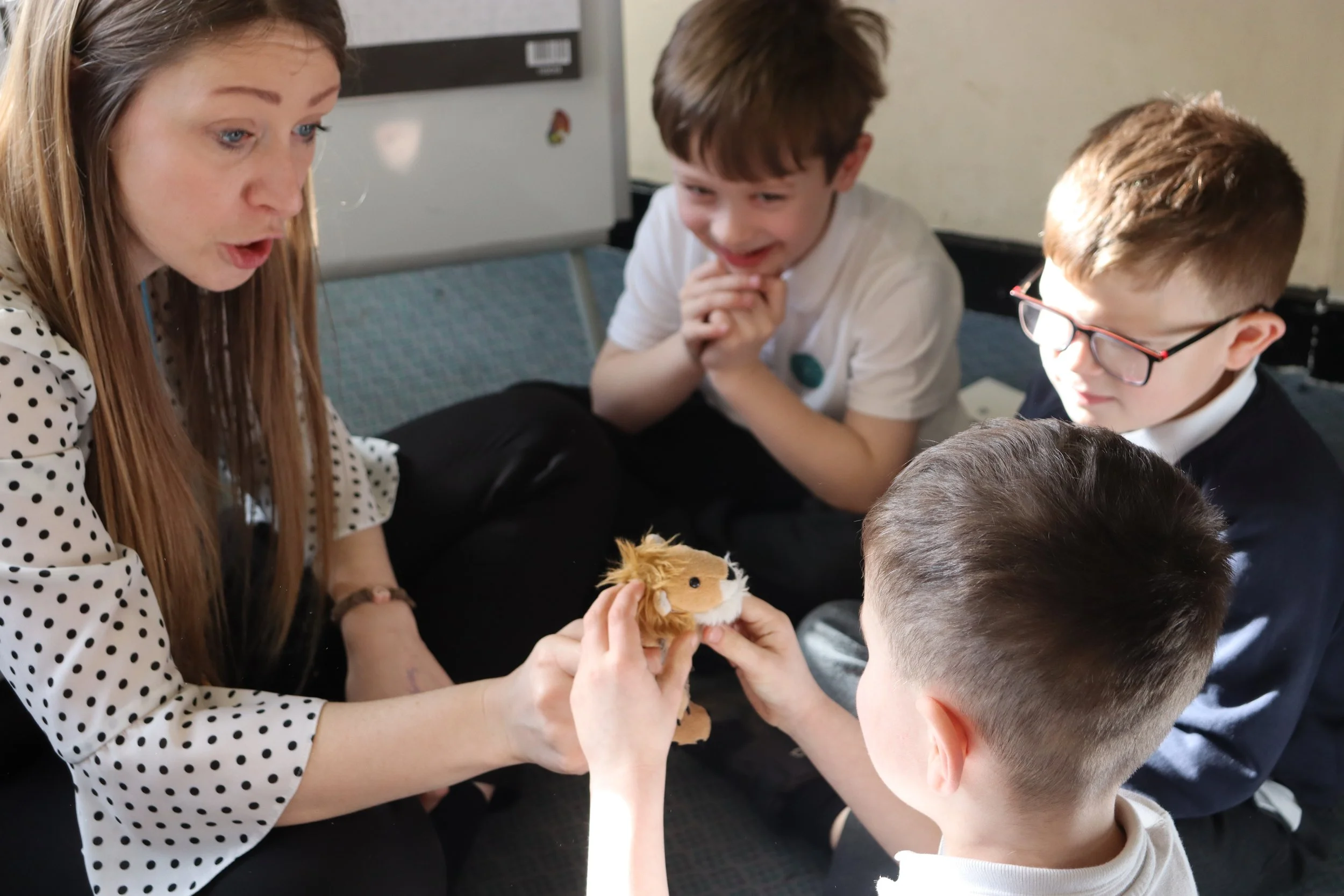
A pair of pupils speaking and listening to each other

Photo: Topsy Page

Louise is a Year 3 teacher in Manchester. She changes her class talk partners every week. Here’s a transcript of a conversation we had:

Topsy: Why do you change partners each week?

Louise: Through life, we need to learn to tolerate differences and learn to work with different people. Children can become comfortable with the same partner – changing every week pushes them out of their comfort zone. The knock-on effect is that it increases their confidence. So a quiet child might end up with someone who needs support – they might need to explain to them. It’s forcing them, in a gentle way, to use their voice.

Topsy: What has the impact been?

Louise: Friendships, I think. I have very few disagreements between the children. It could be a coincidence, or it could be because they’re used to working with so many different children. At times I think, have I made the wrong decision about a pairing? but over time it pays off. It takes patience and perseverance on my part. I test the waters, give a while.

And it increases their ability to collaborate. They’re learning to collaborate with anyone, and to communicate with different types of personalities. I talk to them about my expectations – of how they will collaborate.

It would be easy to say, Oh, that might not be a good match – but it’s important to persevere. Some parents comment on how much their child has grown in confidence. And the children like it – it’s boring with the same partner all the time. They know every Monday to look for where they are sitting. If I don’t have a chance to do it, they ask me with such a keenness! You can see that’s what they want.

Topsy: Are there any exceptions? Any children who you don’t change their partner? Or any challenges?

Louise: No. There is one child who needs to sit near the door, but she still has a new partner each week. I do have a couple of children who are working at Early Years level. They need a really supportive partner to work with them. It would be easy to always pair them with the same person – I have three or four children who are amazing at supporting – but it wouldn’t be fair on them. Sometimes it starts off not well because they don’t know how to support, but over time they learn strategies.

Worth it

This conversation reflects my own experience – that changing talk partners regularly takes perseverance, but it’s so worth it. If you haven’t already, consider committing to this in your classroom.
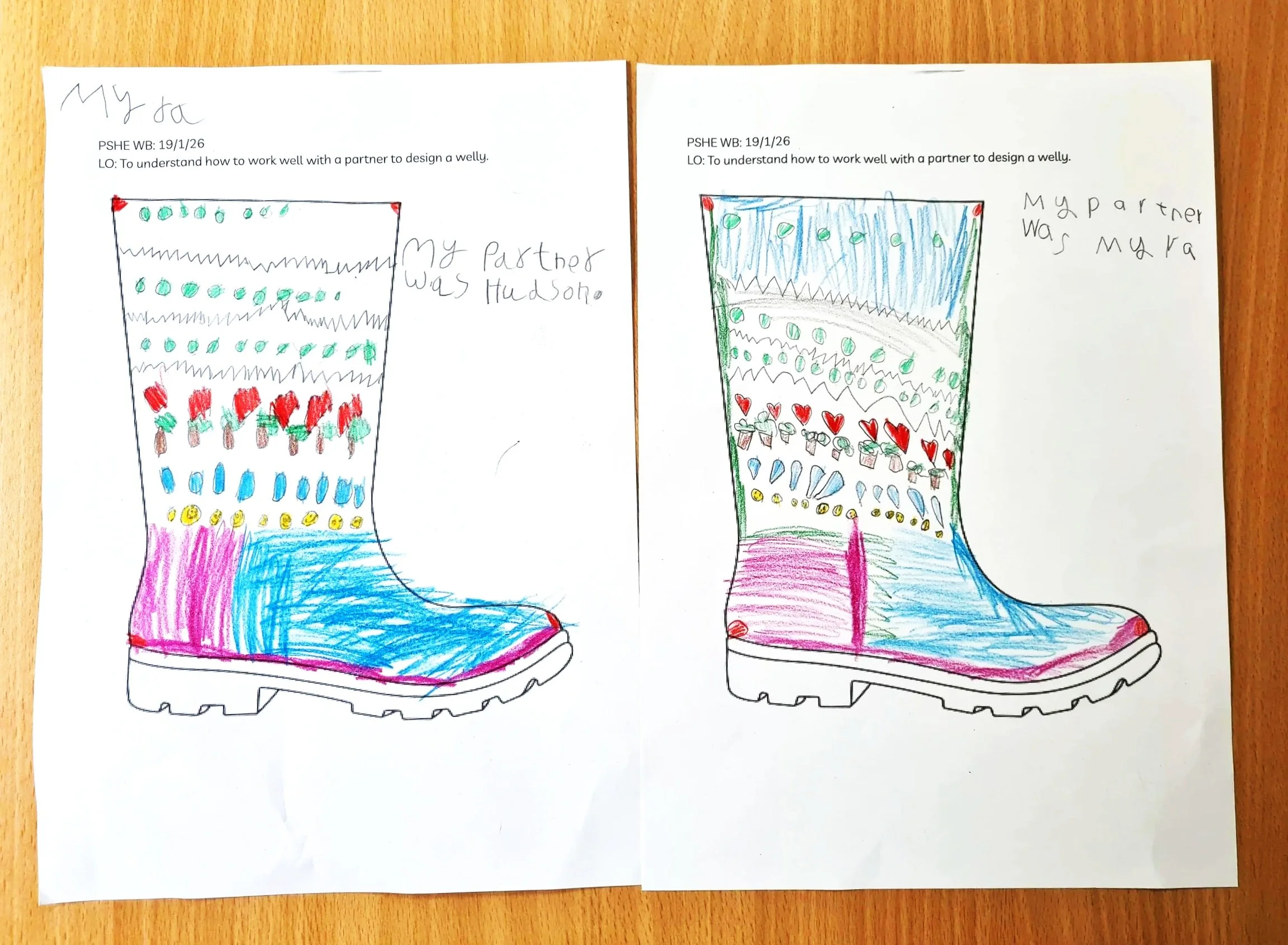
 
More about talk partners
Oracy - effective talk partners.JPG
Apr 24, 2026
“It’s forcing them, in a gentle way, to use their voice.”
Apr 24, 2026

A teacher talking about why she changes pairings in her class every week

Apr 24, 2026
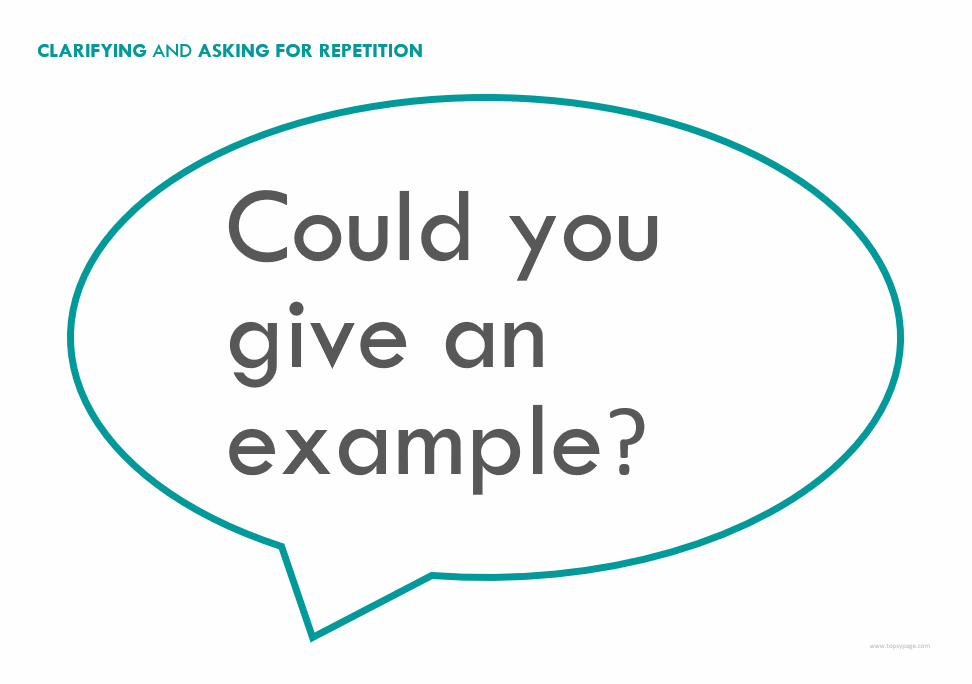
Listening prompts - example.png
Feb 6, 2026
Listening prompts
Feb 6, 2026

20 prompts to help students show they have been listening

Feb 6, 2026
Oracy 100 Ideas for Secondary Teachers - cover.jpg
Jan 16, 2026
My new oracy book just published!
Jan 16, 2026

Published 15 Jan 2026, with Alan Howe

Jan 16, 2026
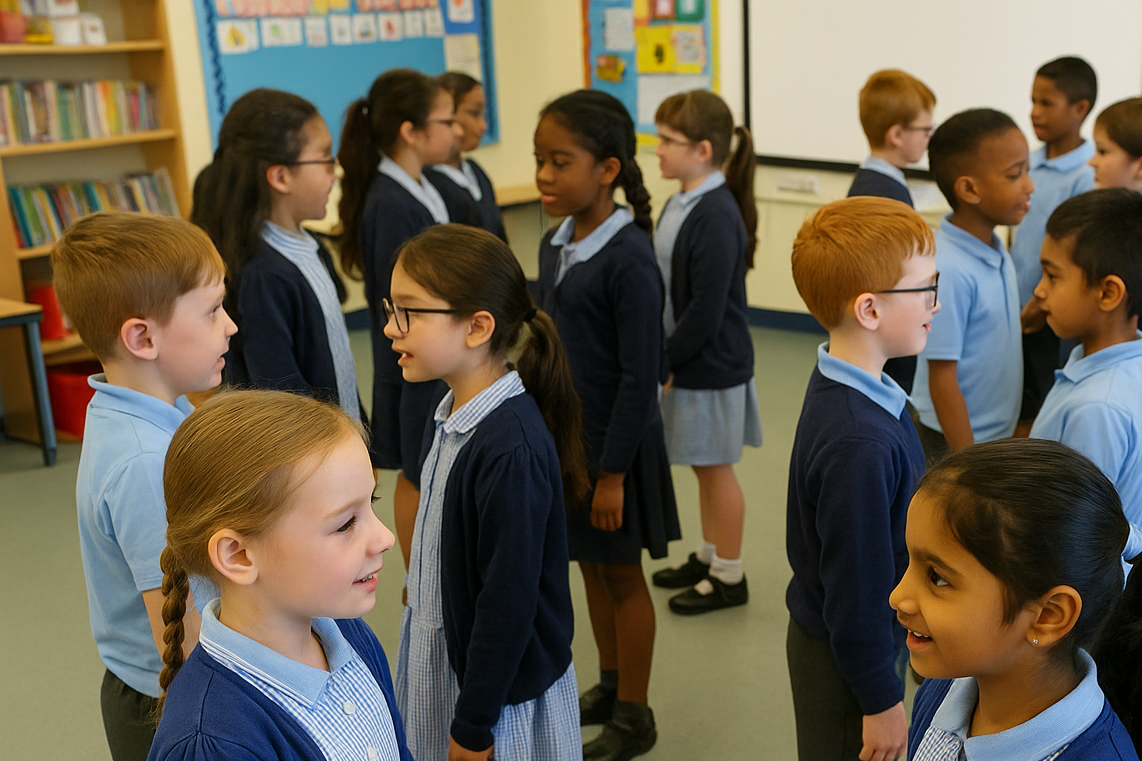
Oracy - AI concentric circles.png
Nov 21, 2025
Concentric circles – oracy structure
Nov 21, 2025

A great way to get students used to talking to different people

Nov 21, 2025
Oracy - students speaking and listening
Nov 7, 2025
'You said, I think' – oracy structure
Nov 7, 2025

A surprisingly simple way to improve listening and dialogue

Nov 7, 2025
Oracy activity - describe and draw.jpg
Oct 31, 2025
Have you tried describe and draw? Oracy activity
Oct 31, 2025

A structure which develops speaking and listening, and can be used across the curriculum

Oct 31, 2025
oracy - maths in pairs.png
Oct 17, 2025
If you want them to collaborate, stop giving out individual resources!
Oct 17, 2025

Collaboration is much more likely when pupils have to do a shared piece of work

Oct 17, 2025
Oracy - Maths chant.png
Sep 12, 2025
Saying it out loud really helps you remember
Sep 12, 2025

Give students opportunities to say and apply new vocabulary

Sep 12, 2025
jesse-orrico-Us3AQvyOP-o-unsplash.jpg
Jun 13, 2025
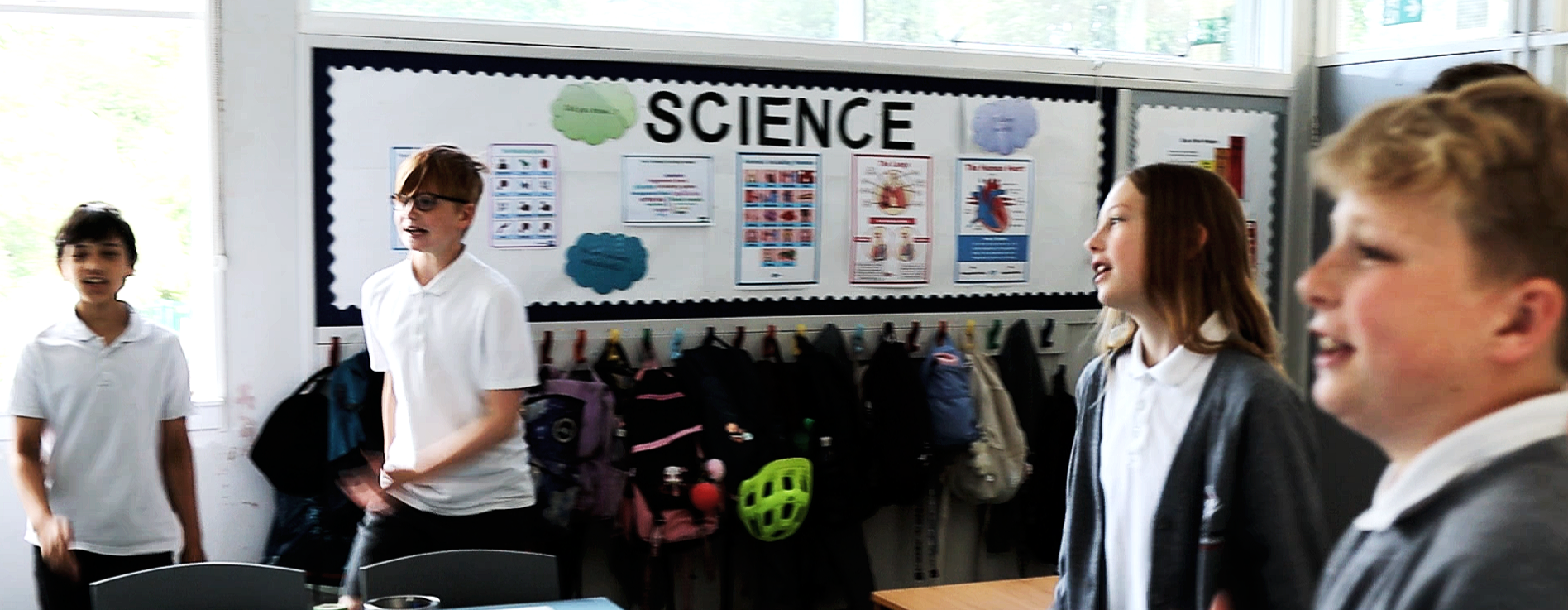
Learning through talk in Science
Jun 13, 2025

How one teacher got everyone thinking, talking, listening and learning

Jun 13, 2025
Oracy - changing pairings.JPG
Jun 6, 2025
‘Everyone works with everyone’
Jun 6, 2025

Give pupils the skills and resilience to work with a diverse range of people

Jun 6, 2025
jessica-lewis-thepaintedsquare-g4WinrGsMl0-unsplash.jpg
May 2, 2025
Oracy for revision
May 2, 2025

Harness the benefits of collaborative talk

May 2, 2025
Choosing a P4C question.jpg
Sep 27, 2024
Positive behaviour and focus in P4C
Sep 27, 2024

Ways to keep everyone engaged and develop the community of enquiry

Sep 27, 2024
Pair talk in the classroom.jpg
Sep 13, 2024
Partner 1 and Partner 2
Sep 13, 2024

Increase the effectiveness of talk partners

Sep 13, 2024
100 Ideas - Oracy - Topsy Page.jpg
Jul 19, 2024
My oracy book just published!
Jul 19, 2024

Including free preview and where to buy

Jul 19, 2024
Imaginary creature - listening game example.jpg
Jul 12, 2024
Five games to develop listening skills
Jul 12, 2024

Focus in on this critical aspect of oracy

Jul 12, 2024
P4C dialogue in the classroom.jpg
Mar 22, 2024
What does collaborative thinking look like in P4C?
Mar 22, 2024

A detailed description including building, helping, sharing and working together

Mar 22, 2024
ladybugs-1593406_1280.jpg
Mar 15, 2024
'Ping-pong' – a simple talk partner structure
Mar 15, 2024

Examples of purposeful talk for learning

Mar 15, 2024
Good talk partners 1.jpg
Jun 23, 2023
“They always listen to my ideas”
Jun 23, 2023

Ask your class about how to communicate well with a partner

Jun 23, 2023
Talk partners - getting ready.jpg
Mar 24, 2023
A few seconds well spent
Mar 24, 2023

Take a moment to check talk partner pairings to make sure no-one misses out on learning

Mar 24, 2023
Talk partner prompts.jpg
Feb 24, 2023
Talk Prompts for talk partners
Feb 24, 2023

Providing talk prompts to students can increase the quality of partner talk

Feb 24, 2023
IMG_7448.JPG
Nov 25, 2022
Talk in Assembly
Nov 25, 2022

A simple way to make assemblies more interactive

Nov 25, 2022
talk game postcards.JPG
Oct 28, 2022
Postcard collection
Oct 28, 2022

Four great ways to use postcards as a resource for Talk

Oct 28, 2022
Talking Object - Topsy Page.JPG
Sep 9, 2022
Talking objects – tips for Talk Partners
Sep 9, 2022

Maximise the quality and impact of pair talk

Sep 9, 2022
Reading practice
Aug 5, 2022
Repeated oral reading
Aug 5, 2022

Reading aloud the same content several times can be very useful

Aug 5, 2022
Pair talk in Greater Manchester.JPG
Jun 3, 2022
Turn and Talk – tips for pair tasks
Jun 3, 2022

Including four potential pitfalls to reflect on

Jun 3, 2022
Oracy - talking stones for pair talk.jpg
May 13, 2022
“As soon as she had the stone she started talking!”
May 13, 2022

Why giving out ‘talking objects’ is worth the hassle

May 13, 2022
Frog talking toy for P4C and Oracy.jpg
Apr 29, 2022
P4C for children with SEND
Apr 29, 2022

Strategies to help as many pupils as possible access philosophical enquiry

Apr 29, 2022
Oracy - group discussion task.JPG
Apr 22, 2022
When did you last really look at your class?
Apr 22, 2022

The importance of taking a moment to look and listen carefully

Apr 22, 2022
IMG_6264.JPG
Apr 1, 2022
Structured paired reading
Apr 1, 2022

Develop fluency, collaboration, turn-taking and more

Apr 1, 2022
Oracy Cambridge blog snip.png
Feb 18, 2022
Out of the mouths of babes
Feb 18, 2022

My blog post for Oracy Cambridge

Feb 18, 2022

Tagged: talk/oracy, pair talk / talk partners, less confident talkers / 'quiet children', confidence, social & emotional oracy skills, peer support, inclusion, friendship, pupil engagement

Older Post“We need to stop being shy and show who we really are!"
Back to Top
West Yorkshire, United Kingdom