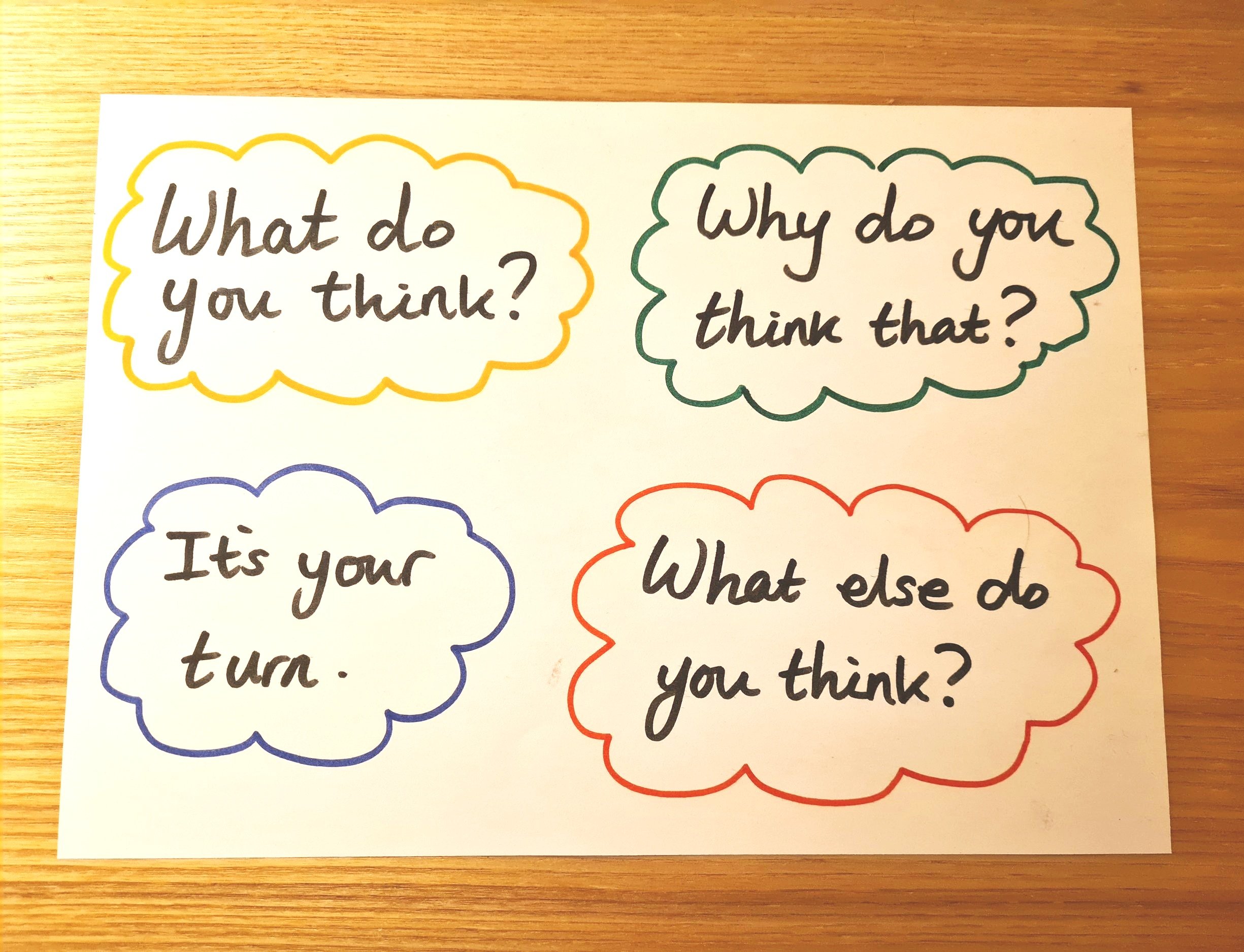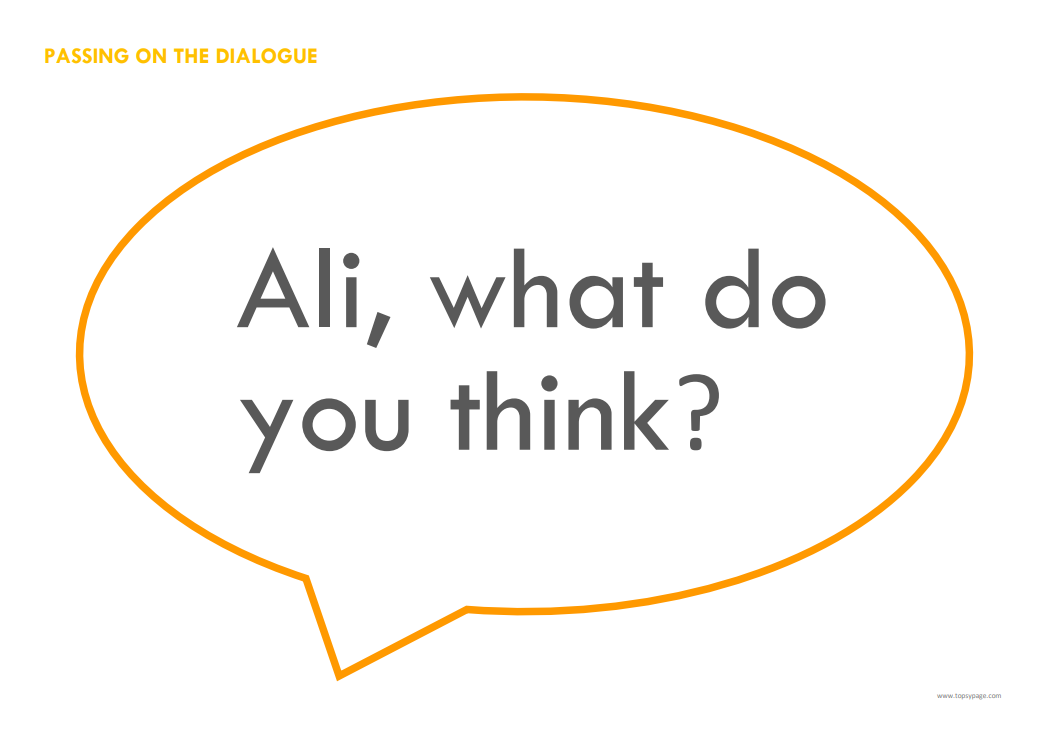
There are many different ways to show that we are listening.
Here are some prompts which your students could practise using to show their peers that they are listening to them during discussions:
Clarifying and asking for repetition
I’m not sure I understood that – can you explain it again?
Could you say that in a different way?
I didn’t catch that last part, could you repeat it?
Please can you slow down a little, so I can follow?
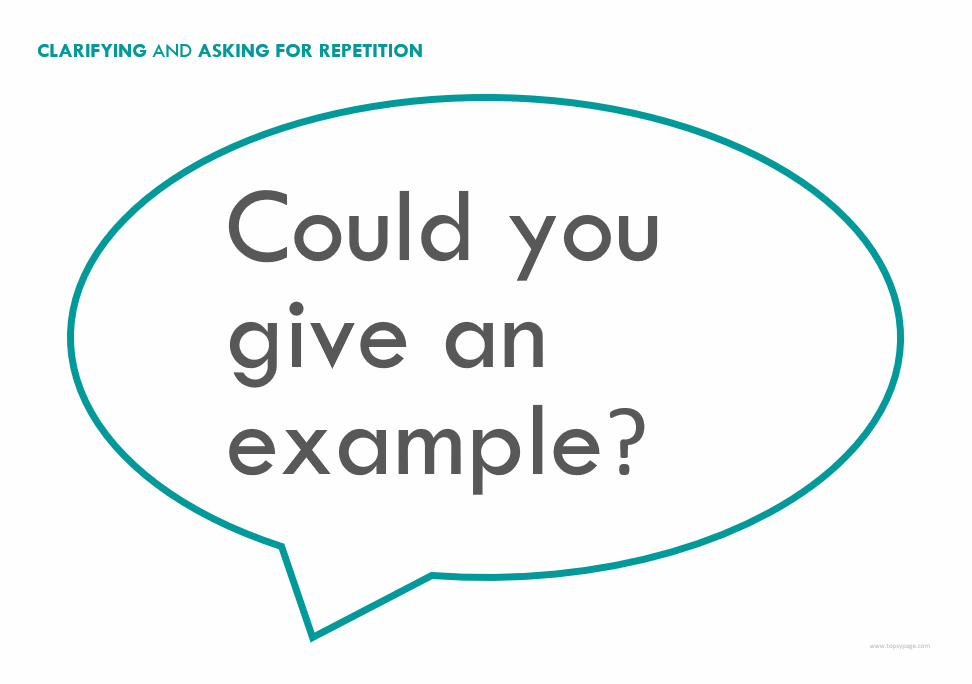
Could you give an example?
Showing interest and encouraging more detail
That’s interesting!
I like that idea – how did you think of it?
What happened next?
Can you explain why you think that?
I hadn’t thought of that – can you expand on it?
Agreeing, disagreeing, and building on ideas
I agree with you because…
I see your point about …, but I think…
That’s a good idea – it makes me think of…
I’d like to add something to what you said about…
Another way to look at it might be…
Checking understanding and summarising
So you’re saying that…
Do you mean that…?
If I’ve understood correctly, you think that…
So your key point is…
I think you’re saying three main things…
Talk prompts and sentence stems to help learners express different types of thinking
Help students to use the language of Maths
A detailed description including building, helping, sharing and working together
Pupils feel that P4C helps them with everything from relationships to confidence to staying calm
How one teacher helped her class go deeper in their P4C enquiry
Providing talk prompts to students can increase the quality of partner talk
Ensure consistency and impact for high-quality pupil dialogue.
I strongly recommend providing Talk Prompts to help pupils formulate high quality spoken sentences and then bring powerful, formal phrases into their writing.
When using random selection in whole class learning, if a child doesn’t respond, there are several options.
I’ve noticed it’s useful to provide Pupil Talk Prompts that enable them to ask for thinking time or help.
A great way to start the day in Early Years - developing early language and reasoning as well as engaging families in their child’s learning.
Pupils immediately speaking in more powerful, articulate sentences as a result of a really simple technique.
Using prompt cards to raise the level of spoken language as well as written language.