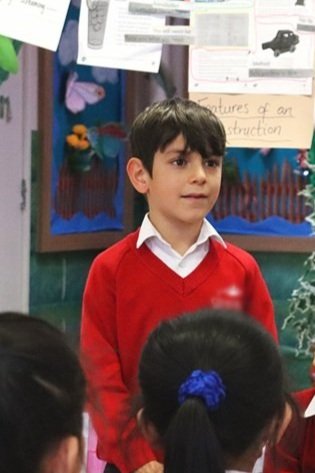
Image by Melani Marfeld from Pixabay
Sometimes I visit schools which are ‘no hands up’ schools.
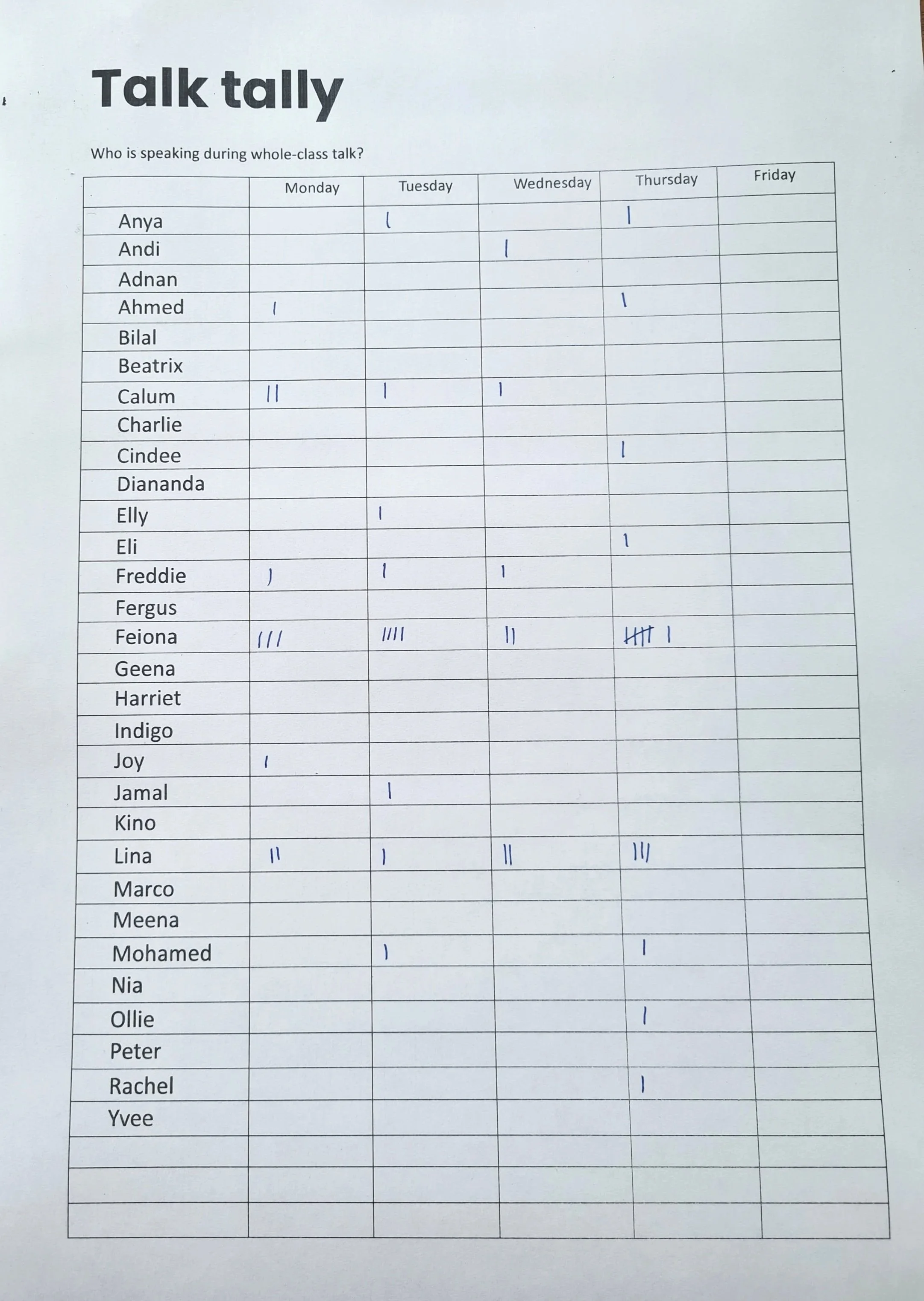
The reasoning behind ‘no hands up’ is that if we rely on volunteers during whole-class learning, lots of students won’t speak.
So, in a ‘no hands up’ school, you’d expect to see participation systems which are not just about choosing volunteers.
Unfortunately, this is not always happening. Here are some instructions I’ve heard in ‘no hands up’ schools: Eye contact if you want to speak! Sit up if you want me to choose you! Thumbs up if you have the answer! Chins up if you want to say your idea!
They’re missing the point! With all these phrases, the teacher is still asking for volunteers.
Two things to consider:
I wonder whether a more positive phrase would be better, instead of ‘no hands up'. How about being an ‘Everyone participates’ or an ‘Every voice’ school?
Volunteer-based participation can be helpful sometimes, so I don’t recommend a ‘no volunteers ever’ policy. But I do strongly recommend that teachers should normally lead with other systems – ones that help everyone to be involved.
I’ve written extensively about participation systems for whole-class learning:
https://www.topsypage.com/blog/2020/6/19/what-about-the-quiet-children
https://www.topsypage.com/blog/2020/11/13/should-everyone-talk-to-the-class
https://www.topsypage.com/blog/2024/9/20/how-can-i-get-everyone-to-join-in
https://www.topsypage.com/blog/2025/1/31/how-can-i-get-everyone-to-join-in-part-2
https://www.topsypage.com/blog/2026/5/8/more-hands-or-ill-cold-call
I also discuss this in a recent interview: