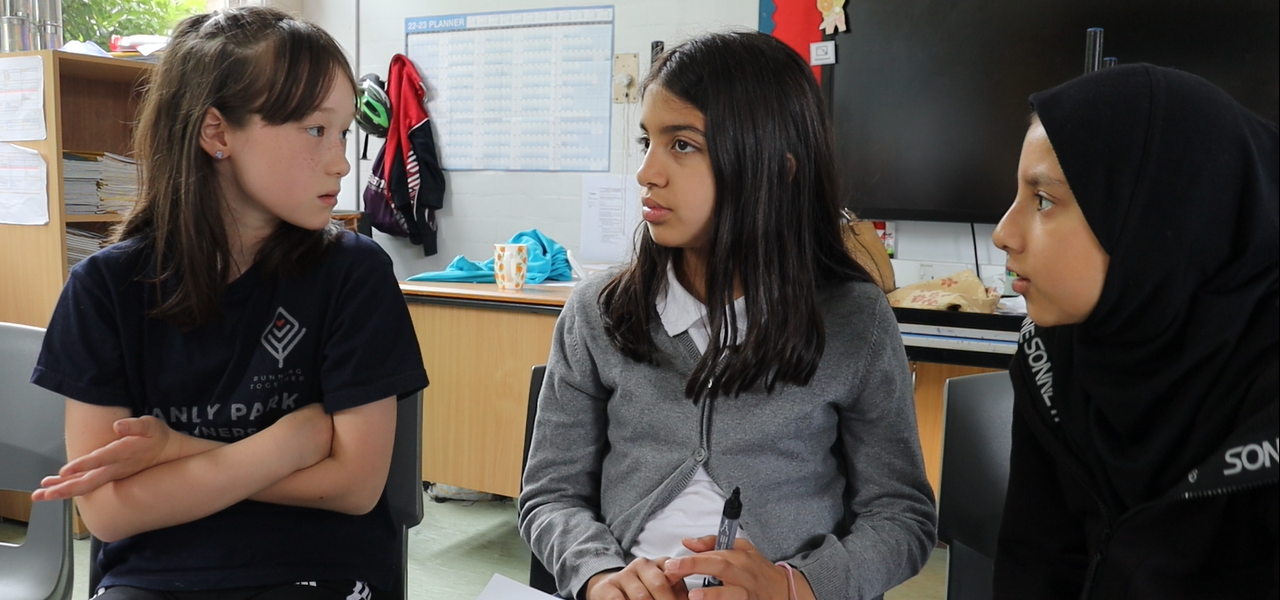

This is a fascinating video of an experiment where children were asked to draw pictures of people in different jobs. You could use it as a Philosophy for Children stimulus.
https://youtu.be/qv8VZVP5csA?si=1-hX8mXMCynQ-9lB
Concepts include gender, jobs, aspirations, role models, representation and assumptions.
Possible questions:
Is it always true that you have to ‘see it to be it’? How close to your own identity do your role models have to be? Is it possible to see a wide range of different people as role models?
Should people who work in professions where they are in the minority, actively work to challenge stereotypes?
If we notice that someone seems to be representing a minority in a job, is it better to mention it, celebrate it, or not make an issue of it?
How can we make job applications as fair as possible? Should we decide who gets the job before we know about people’s age, gender, sexuality, disability status and so on? How could we do that?
Positive discrimination – good idea / bad idea?
When thinking about our future, should we always aim for high-status jobs, or is it ok to just want to get by?
Is a job the most important thing in life?